
A name behind the number
Witness Account of Torture and Detention in Gaza
Whenever I answered “I don’t know,” I was beaten all over my body.
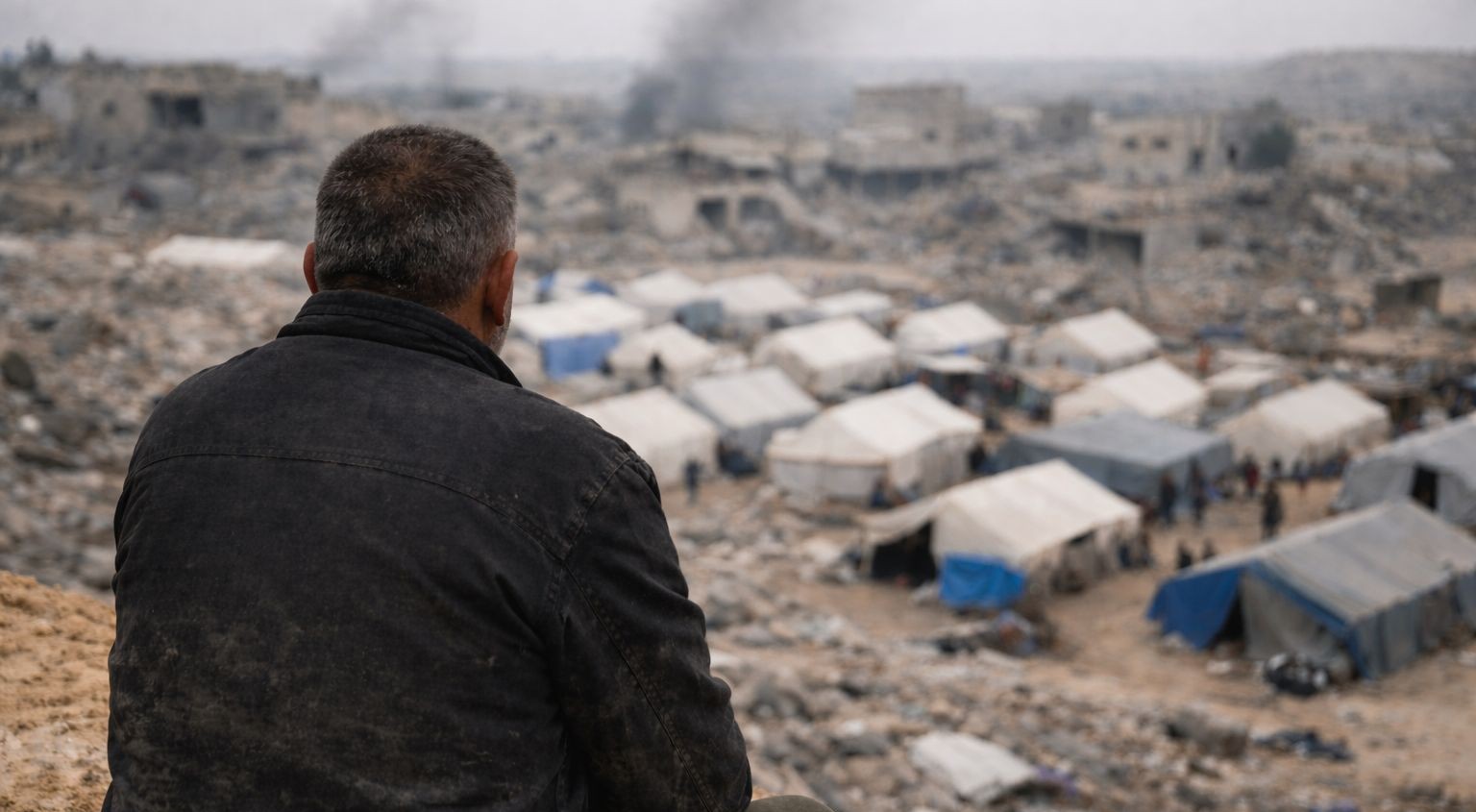
I lived in a ground-floor apartment in my family’s three-storey house in the Al-Amal neighbourhood of Khan Younis. When the war on Gaza began on 7 October 2023, my family, relatives, and I were at home. We remained there for months, hearing intense bombardment everywhere.
With the start of the Israeli military operation in Khan Younis in early December 2023, the situation became increasingly dangerous, particularly as Israeli occupation forces and their vehicles advanced into the Al-Katiba area north of the city and approached the eastern part of Al-Amal neighbourhood, as well as its western side, including the Social Affairs area and the Taiba Towers.
Accordingly, on 7 January 2024, my wife, children, and I fled to the headquarters of the Palestinian Red Crescent Society (PRCS) in the centre of Al-Amal neighbourhood, seeking safety, as many people were doing. A few days later, my brothers and their families joined us there.
During our forced displacement, my brother Imad, 51 years old, was injured, while others were killed when an Israeli drone targeted a group of civilians on Al-Qudra Street, outside and opposite the northern side of the PRCS headquarters. I do not recall the exact date of the incident. My brother was admitted for treatment on the third floor of Al-Amal Hospital, affiliated with the PRCS, and I stayed with him as his companion.
On 5 February 2024, Israeli military vehicles advanced towards the PRCS headquarters, besieged it, and ordered the displaced persons inside to evacuate and move westward to Al-Mawasi, west of Khan Younis. People left, including my family and relatives. I remained behind with my nephew Amjad, 13 years old, to accompany his injured father, Imad. After the evacuation, only patients, their companions, and medical staff remained—around 200 people in total.
During the Israeli soldiers’ incursion into the compound, they forced us down to the ground floor, to the ophthalmology department, bound our hands behind our backs with plastic ties, and questioned us about our personal details. Israeli soldiers arrested five people—three from the medical staff and two companions—then left the PRCS compound. We remained there, and my brother Imad began to recover. At around 2:00 a.m.
on 24 March 2024, Israeli occupation forces returned and besieged the PRCS building for a second time, amid heavy gunfire and fire belts around and inside the compound. They ordered us to leave and head towards Al-Mawasi, west of Khan Younis. Chaos ensued, and we did not know what to do. While attempting to exit the building, one PRCS staff member from the Abu Eisha family was shot in the chest and fell to the ground.
My brother Imad tried to help him, but as Imad raised his head, he too was shot in the face by a sniper positioned on one of the surrounding buildings. His injury was severe. I searched for a doctor but found that they had already left the compound. My nephew Amjad, some friends, and I placed my brother on a stretcher and carried him out. As we exited the PRCS compound, tanks surrounded us on both sides of the road.
We walked westward for about 500 metres until we reached the Social Affairs building, which the soldiers had turned into their base, converting the adjacent road into a checkpoint separating Al-Amal neighbourhood from the coastal area. The soldiers ordered us to place my brother on the ground and approach them. I put my brother down and walked towards a soldier visible to us from a window of the Social Affairs building. He asked for my ID card, which I did not have.
He then asked for my name, which I gave. After checking my name on a phone he was holding, he ordered me to strip, gave me a white overall, and ordered me to wear it. They then bound my hands behind my back with plastic ties, blindfolded me with a cloth, and took me to the basement of the Social Affairs building. They arrested my nephew Amjad but released him after two hours. I was the first to be arrested.
In the basement, they interrogated me about whether I knew anyone from the resistance or Hamas, and about tunnels. The interrogation lasted about an hour, during which I was beaten with fists and a baton. After the interrogation, they placed me in a room with a number of detainees. After sunset, they took me and two other detainees to a tank and loaded us inside. After about an hour of driving, the tank stopped.
They unloaded us, removed our restraints, gave me underwear, a grey tracksuit, and slippers. After I put them on, they shackled my hands and feet with iron restraints and took me to a doctor, who asked whether I had chronic illnesses or had undergone previous surgeries. They then took me to another room, photographed me, took an iris scan, and placed a blue bracelet with a number I do not recall on my left wrist. They blindfolded me again and took me into a minibus, which drove for 5–10 minutes.
Two soldiers led me to a room, sat me on a chair, and shackled me to it—my hands to the chair and my feet to its legs. They removed the blindfold, and I found myself in a 3×3 metre room with a desk and a computer, two soldiers behind me, and a third person who entered wearing civilian clothes—bald, fair-skinned, heavy-built, about 180 cm tall.
He introduced himself as military intelligence and began interrogating me about who I knew from Islamic Jihad and Hamas, the locations of tunnels, and who had participated on 7 October. The interrogation proceeded in rounds: he would ask questions, leave, then return. Whenever I answered “I don’t know,” I was beaten all over my body.
During the interrogation, whenever I denied knowing anyone from Islamic Jihad or Hamas or knowing about tunnels, the two soldiers behind me would beat me all over my body, focusing on punching my groin (testicles), squeezing them, and attempting to insert a pen cap into my urethra. This was repeated multiple times (I do not recall how many). Each time, I screamed in severe pain, feeling dizzy and close to losing consciousness. The last time, I could not endure it and lost consciousness.
When I regained consciousness, I found myself in a hospital bed— I do not know the hospital’s name or location—shackled by my hands and feet to the bed, with a guard posted at the door. I learned that I had undergone surgery and that one of my testicles had been removed. I remained in the hospital for a week in this condition. My restraints were only removed when using the bathroom or eating. Food consisted of three meals a day, each a single chocolate-flavoured pudding cup.
As for treatment, I was given one anti-inflammatory pill per day. After a week, they returned me to the barracks of Sde Teiman detention camp, as I later learned. There, I was given antibiotics for ten days. I spent three months in Sde Teiman, during which I was subjected to repeated interrogations, beatings, and humiliation by occupation forces. I do not recall how many times. The first occurred ten days after my return from the hospital.
During one interrogation, an interrogator extinguished his cigarette on the back of my neck while asking me the same questions as before. Whenever soldiers came to take me for interrogation, they would take me out of the barracks, bind my hands behind my back, blindfold me, and assault me with fists, boots, punches, and kicks while escorting me to the interrogation rooms.
I was also subjected to stress positions: my hands bound behind my back while standing; being forced to kneel; or standing with my bound hands raised above my head. If I tried to rest my hands, I would be beaten and insulted. I would remain in one of these positions for one to two hours, depending on the soldier’s mood. I felt that the soldiers deliberately assaulted us to humiliate us, especially during transfers between barracks or to other detention areas.
We were beaten with fists, kicks, batons, electrocuted, and verbally abused with obscene insults. During transfers between barracks, soldiers would spit on their boots and order detainees to lick them. This happened to me about 20 days after I was transferred again to Sde Teiman. I refused to lick the spit, so a soldier punched me several times and shoved me into the barracks. During detention, our day began at 5:00 a.m., when we gathered our very thin mattresses and blankets and set them aside.
Roll call took place four times a day: at 5:00 a.m., noon, after sunset, and at midnight. We were forced to sit all day on our buttocks with our legs stretched forward and our hands shackled with iron cuffs. Movement and talking to neighbouring detainees were prohibited. We remained seated like this until midnight. To use the bathroom, we had to ask permission from the guard, who would give us a number. We might wait one, two, or even three hours before being allowed to go.
Showering was allowed once a week for no more than four minutes—just enough for water to touch your body before you had to get dressed, otherwise you would be beaten. We were subjected to suppression at least twice a week. It would begin with soldiers ordering us to lie face down with our hands over our heads and throwing stun grenades. Soldiers would then enter with dogs muzzled with metal restraints; the dogs would walk over our bodies and urinate on us.
Afterwards, certain detainees’ numbers would be called, they would be taken aside, beaten severely, and dogs would be released at them to terrorise them. I was severely beaten, attacked by dogs, and hung from a fence more than once. Each suppression lasted about half an hour. After about 75 days, I was brought before a court via phone. The judge accused me of being a danger to the State of Israel and of belonging to Islamic Jihad. After three months, I was transferred to Ofer Prison.
Soldiers came, took me out of the barracks, changed my hand restraints from front to back, shackled my feet, blindfolded me, and loaded me onto a bus. I was seated with my head between my knees like the other detainees; we were 30 in total. The bus journey lasted about three hours, during which we were beaten with punches and slaps and subjected to electric shocks. Soldiers ordered us to sing.
The bus stopped when we reached Ofer Prison, as I later learned, and the beatings continued as we were unloaded. After removing the blindfolds and changing restraints to the front, the soldiers told us, “Enter your new home.” I was placed in a room with 16 detainees, containing six bunk beds and a bathroom. We could use the bathroom as needed and shower once a week when water was turned on.
We were subjected to suppression and torture at least twice a week, including during roll call, similar to Sde Teiman. During my detention, I witnessed two detainees being assaulted by soldiers inserting a baton into their anus. One of them was with me in Ofer. He was called out and later returned to the room bleeding heavily from his anus and told me what had happened. Half an hour later, they took him again, and he never returned; I did not see him afterwards.
I spent nine months in Ofer Prison without interrogation. I was brought before a court via mobile phone twice, but I was not allowed to defend myself, as they prevented me from speaking, and the same charges were repeated. After nine months, I was transf
Source: PCHR · https://pchrgaza.org/my-story-of-months-of-torture-and-the-loss-of-my-brother/
More testimonies
 Stories
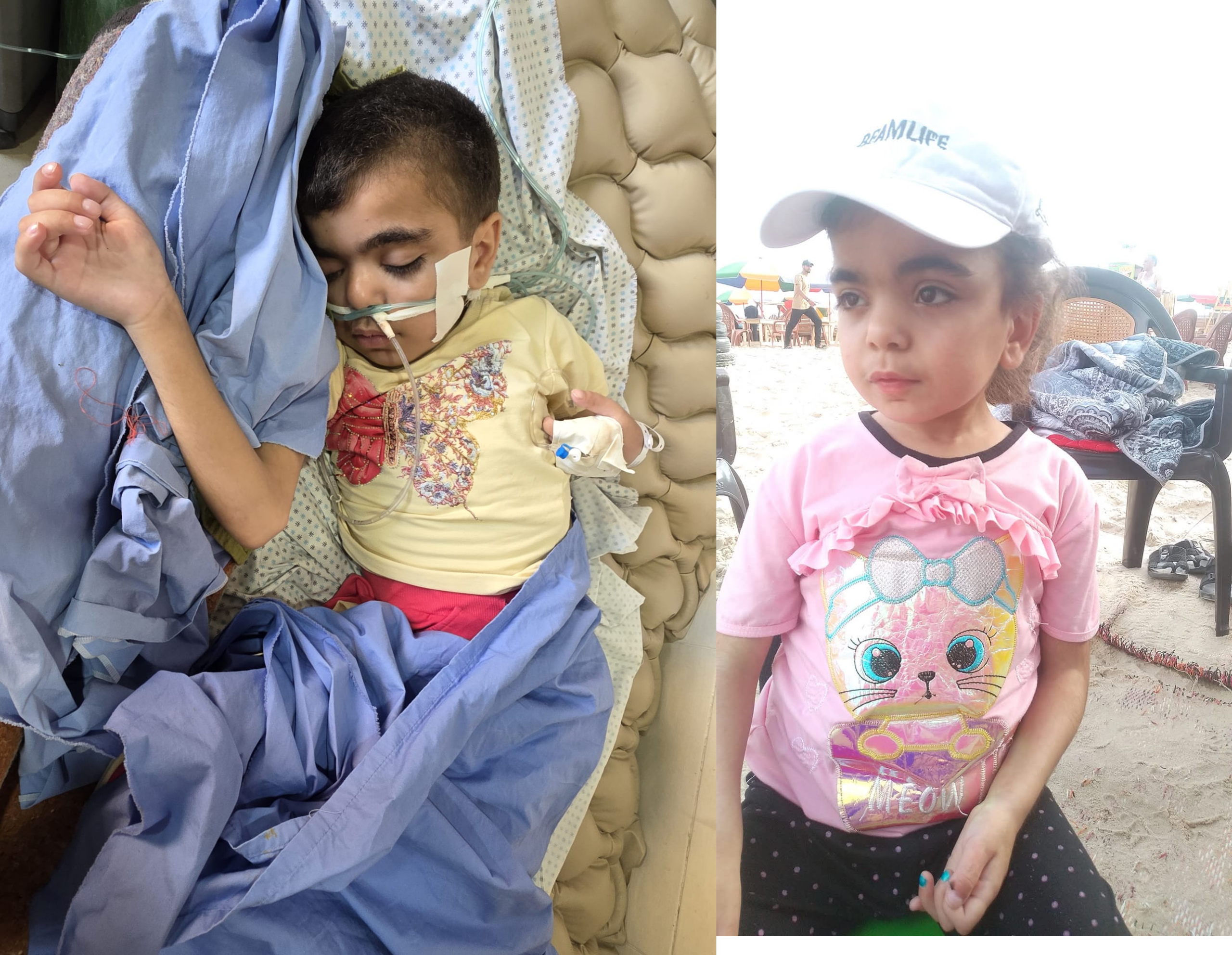
““My daughter’s injuries were the most severe among those who were wounded. Shrapnel penetrated her head, leaving her quadriplegic and in constant pain, with severe spasms. She lost her ability to speak and suffers from bowel incontinence.”
 Stories
““I worry about my detained son, Montaser, wondering how he sleeps and what he eats.”
 Stories
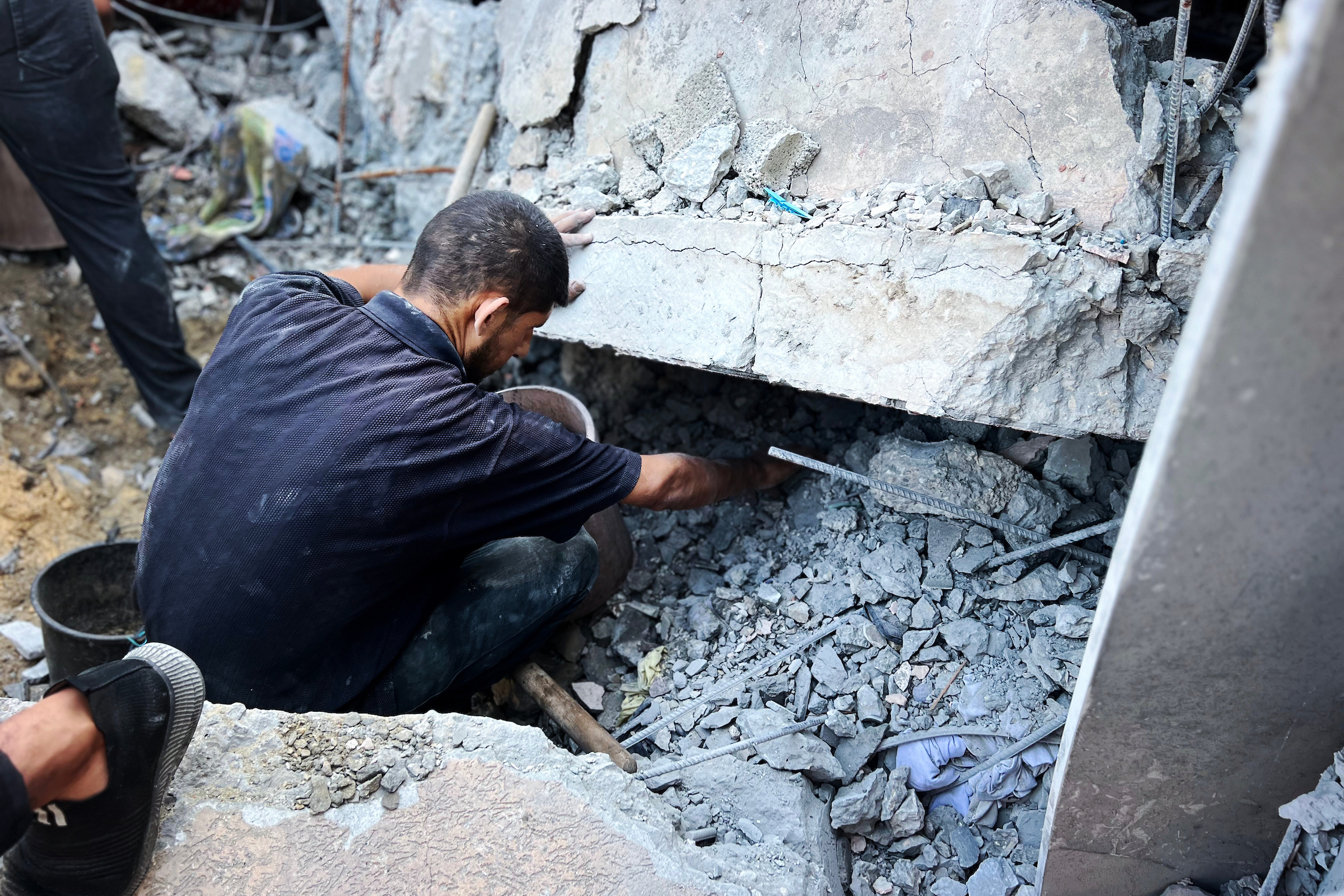
“I lost my entire family and became the only survivor. My grief and sorrow still surround me, and my tears are trapped in my eyes.